
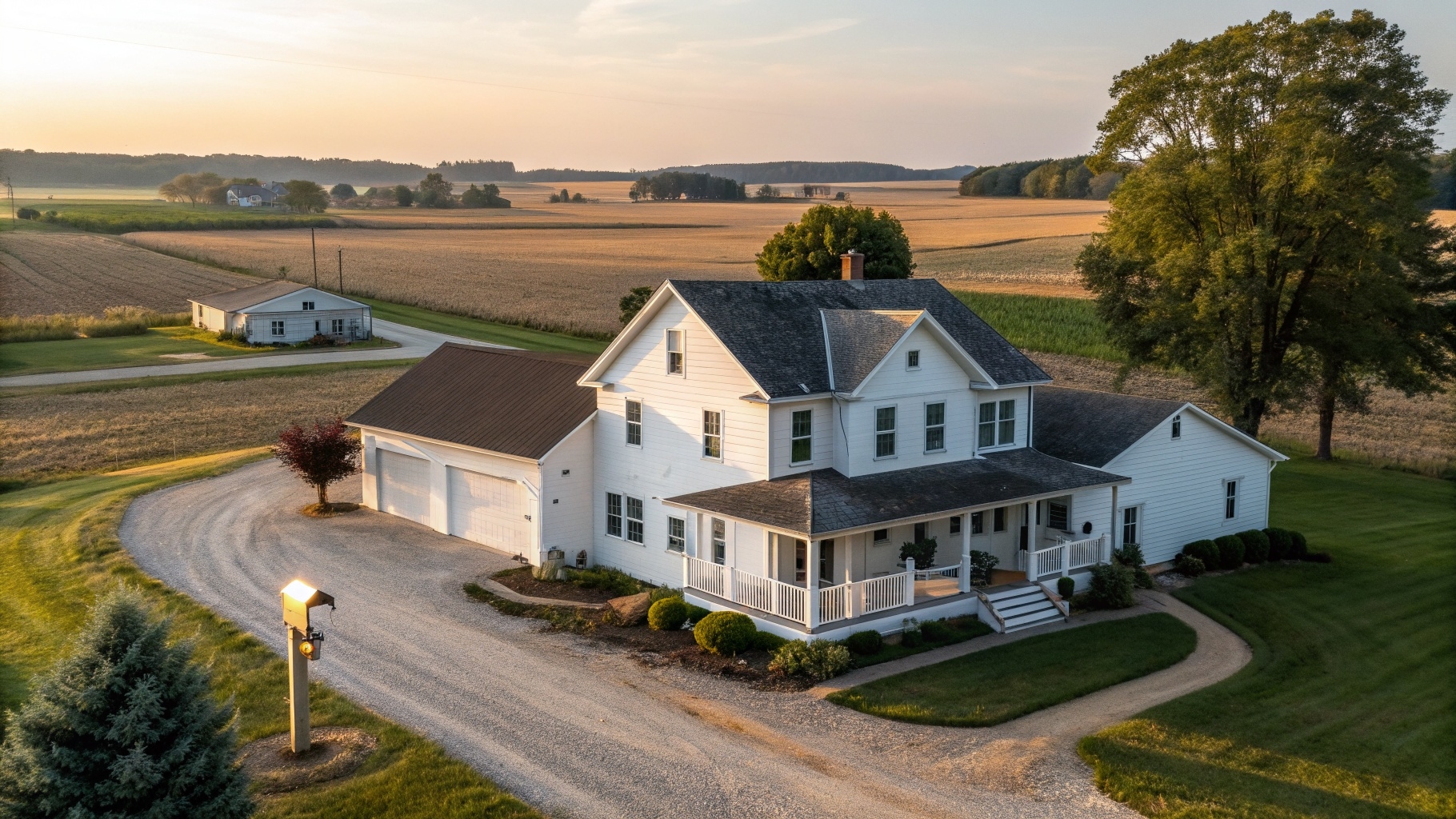
Wasps in Big Bend aren't a generic problem — they're shaped by the agricultural-edge environment, Big Bend's housing stock, and southeastern Wisconsin's seasonal extremes. PIP's treatment protocols for wasps in Big Bend are built on these local realities — not a franchise playbook copied from another state.
Local environment, housing stock, and Wisconsin climate create wasps conditions specific to Big Bend — not a generic problem with a generic solution.
Residential properties in Big Bend, from Fox River flats to surrounding neighborhoods, provide the structural diversity wasps exploit for nesting — eaves, soffits, deck railings, porch ceilings, gable vents, and ground burrows in landscaped beds. The Fox River floodplain dominates Big Bend's pest ecology. Annual spring flooding deposits standing water across the flats, creating a mosquito breeding corridor that most pest companies underestimate. Floodplain humidity keeps wood moisture content elevated in riverside homes year-round, accelerating carpenter ant and termite damage.
Small Fox River village with 1920s–1950s homes along the river and 1970s–1990s ranches on surrounding hills. Older homes in Big Bend, particularly in the Fox River flats area, have more soffit gaps, unsealed gable vents, and aging fascia boards that provide wasp entry into wall voids and attic spaces. These hidden nests grow undetected until wasps emerge through interior light fixtures or ceiling gaps. Yellow jackets in Big Bend also nest underground — exploiting abandoned chipmunk burrows, root cavities, and gaps in retaining wall drainage — making lawn areas and garden beds potential hazard zones from July through October.
Paper wasps build open-comb nests beneath Big Bend eaves and porch ceilings starting in May, with colony sizes growing through summer. Yellow jackets excavate underground nests that can house 1,000–5,000 workers by August — peak aggression occurs in late August through September as colonies compete for dwindling food resources. Bald-faced hornets occasionally nest on structures, particularly where overhanging vegetation provides shelter and concealment. All stinging insects become significantly more aggressive as colony sizes peak and food sources decline in early fall.
Wasps in Big Bend can be dangerous — posing direct health risks when left untreated. PIP provides same-day emergency response throughout Big Bend and all of Waukesha County. Don't wait — call (262) 893-5271 now.
Wisconsin's climate drives distinct wasps patterns. Here's what Big Bend homeowners face each season — and what to do about it.
Overwintered wasp queens emerge in Big Bend when April temperatures consistently reach 50°F. Each queen builds a small starter nest and lays the first generation of workers. Queens in Big Bend select sheltered sites — beneath eaves, inside open soffits, under deck railings, and in garage corners. Spring is the best time for prevention: seal gaps before queens establish, and knock down early nests while they're small.
View Spring forecastColony growth accelerates through Big Bend's summer. Worker populations double every 3–4 weeks. Yellow jacket underground nests that started with 20 workers in June can house 2,000–5,000 by August. Paper wasp nests on eaves grow to hand-size. Summer outdoor activities — grilling, eating outdoors, gardening — increase human-wasp contact in Big Bend yards. Nests discovered in summer should be treated promptly — they only get larger and more aggressive.
View Summer forecastLate August through October is peak wasp aggression in Big Bend. Colonies are at maximum size, food is scarce, and workers become territorial and defensive. Yellow jacket stings increase dramatically as foragers scavenge near trash, fallen fruit, and outdoor events. Queens begin mating flights in September before seeking overwintering sites in wall voids, attic spaces, and under bark. If you haven't treated nests by late September, the safety window narrows rapidly.
View Fall forecastWasp colonies in Big Bend die with the first hard freeze — workers and old queens perish. Only newly mated queens survive, hibernating in wall voids, attic insulation, and under siding. Old nests are abandoned and will not be reused, but the site may attract new queens in spring. Winter is the time to seal all soffit, fascia, and siding gaps to prevent spring queen re-establishment and remove old nests to reduce site attraction.
View Winter forecastPIP's wasps treatment in Big Bend follows a 4-step protocol designed for rural and agricultural-edge homes. Every service starts with a free inspection — we diagnose before we treat, and we never apply generic solutions.
Visual survey of all eaves, soffits, overhangs, deck structures, and outbuildings from safe distance. Ground inspection for yellow jacket entry holes. Species identification determines treatment approach — paper wasps, yellow jackets, and hornets each require different methods.
Professional aerosol or dust application directly into the nest at dusk when the full colony has returned. For wall-void nests, dust insecticide injected through a small access hole. Elevated nests treated from extension ladders or telescoping equipment.
Treated nests removed after 24–48 hours to prevent secondary pest attraction (carpet beetles feed on dead insects). Site sealed to prevent re-establishment. Area monitored for returning foragers. Old nests from previous years removed to reduce site attraction for next spring's queens.
All soffit, fascia, and siding gaps sealed before the next spring queen emergence. Gable and ridge vents screened. Untreated wood surfaces identified for painting or staining — wasps prefer raw wood. Follow-up check scheduled for the following April to catch any new establishment early.
All PIP treatments in Big Bend use EPA-registered, targeted products applied by Wisconsin-licensed technicians. Our methods prioritize family and pet safety — crack-and-crevice application, gel baits, and exterior barriers minimize indoor exposure. We provide specific re-entry timelines for every treatment.
If wasps return between scheduled treatments, PIP re-services your Big Bend property at no additional charge. Our results-backed guarantee means you only pay for protection that works.
Wasps treatment pricing in Big Bend is based on your home's square footage, severity of the issue, and number of treatment points. Every home is different, which is why PIP offers free inspections with transparent, upfront pricing before any work begins. Annual prevention plans — which include quarterly monitoring — provide the best long-term value. No contracts required.
PIP provides same-day emergency service throughout Big Bend and all of Waukesha County. For non-emergency situations, we typically schedule within 24–48 hours. Our Big Bend-area technicians carry full treatment equipment, so most jobs are completed in a single visit. Call (262) 893-5271 for immediate scheduling.
All PIP treatments use EPA-registered, targeted products applied by licensed Wisconsin technicians. Our methods prioritize crack-and-crevice application, gel baits, and exterior barriers that minimize exposure inside living spaces. We provide specific re-entry guidelines for each treatment — typically 30 minutes to 2 hours. Pet and child safety is always the first design consideration.
Wasps pressure in Big Bend varies by season, but year-round monitoring provides the most reliable protection. Quarterly service visits aligned with Wisconsin's seasonal pest cycles ensure treatment stays ahead of population surges. One-time treatments resolve immediate issues, but prevention plans stop infestations before they start — which is always cheaper than emergency response.
Residential areas in Big Bend create microclimates around structures that support wasps activity differently than surrounding open areas. PIP's Big Bend treatment protocols are designed for these specific conditions.
We live and work in Mukwonago. Your pest problems are our neighborhood's pest problems. No call centers, no corporate runaround.
Unlike reactive exterminators, PIP focuses on preventing infestations before they start. Our seasonal programs keep pests out year-round.
We use targeted, EPA-registered products with minimal environmental impact. Safe for your family, pets, and Wisconsin's ecosystem.
Wasp nest by the front door? Mice in the kitchen? We respond the same day because emergencies can't wait.
Pay only for what you need. No long-term commitments, no cancellation fees. Pricing based on your home square footage. We earn your business every visit.
Love PIP? Refer a friend and you both save. You earn 10–20% off your next service; they get 20% off their first.
Don't wait when safety is at risk. PIP's emergency team responds same-day across Waukesha County.
Call Now: (262) 893-5271