Weather-Triggered Report

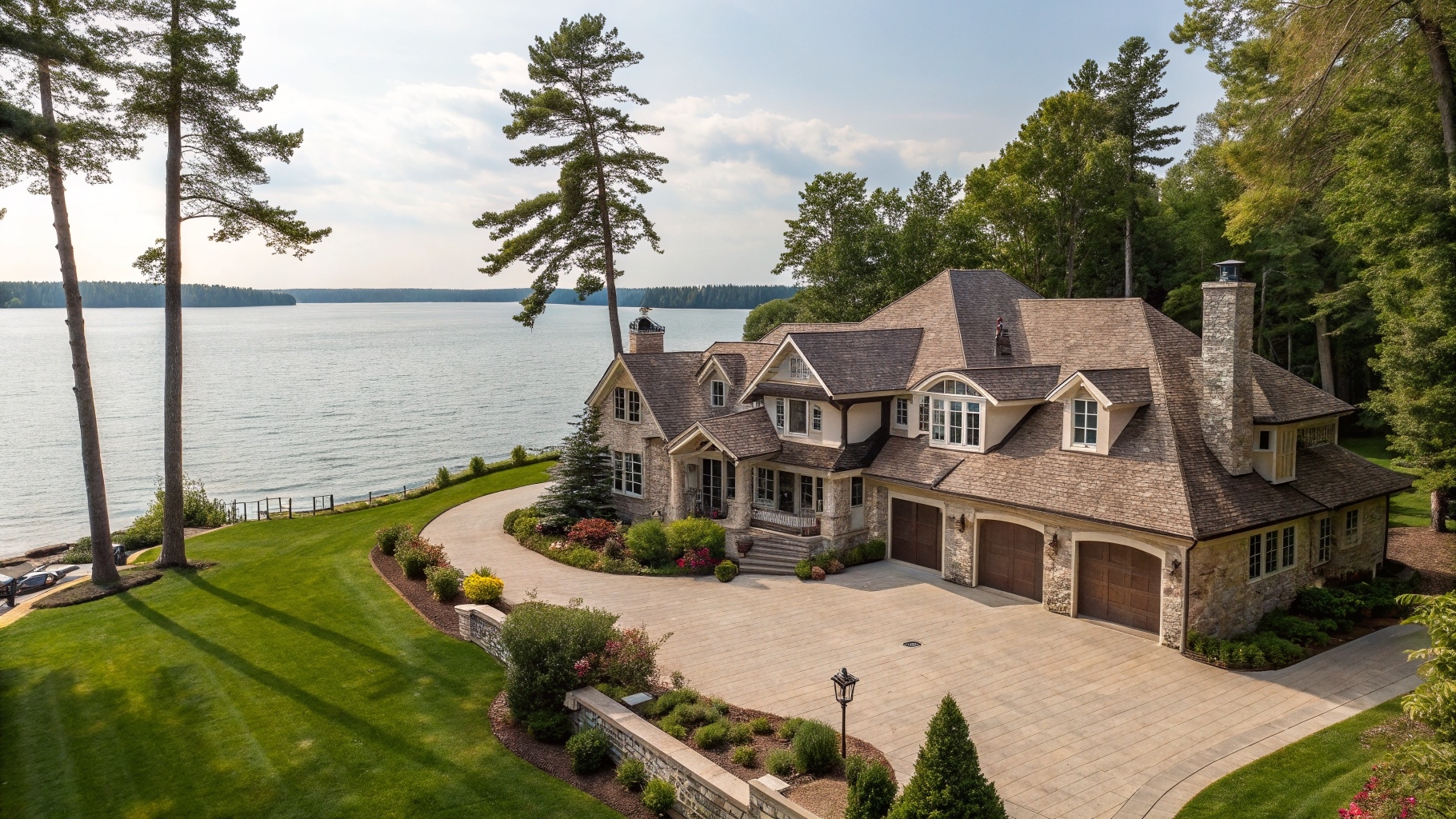
Oconomowoc's lake chain — Lac La Belle, Fowler Lake, Oconomowoc Lake, and Silver Lake — is the crown jewel of western Waukesha County real estate. But the same features that make these properties desirable — historic architecture, mature tree canopy, waterfront orientation, and sheltered lakeside micro-climates — create fall overwintering pest conditions that are among the most challenging in southeastern Wisconsin.
Every October, PIP receives a surge of calls from Oconomowoc lake-chain homeowners dealing with the same multi-species invasion: brown marmorated stink bugs on south-facing stone and stucco, boxelder bugs clustering around lake-facing windows, Asian lady beetles accumulating in attic spaces, and cluster flies buzzing against upper-story glass. Summit and Dousman, connected to the Oconomowoc watershed and sharing its micro-climate characteristics, report identical patterns on their rural-residential properties.
The Oconomowoc lake chain generates a thermal micro-climate that extends fall conditions 2-3 weeks beyond what communities without significant water bodies experience. Lac La Belle alone covers 1,140 acres — enough thermal mass to keep lakefront air temperatures 3-5°F warmer than inland areas through November. This extended warmth means overwintering pests remain active and mobile longer, giving them more time to locate and enter structures.
The lake-chain homes themselves amplify the problem. Oconomowoc's historic lakefront properties — many dating to the 1880s-1920s "resort era" when wealthy Milwaukee families built summer estates — feature construction details that are architecturally magnificent but entomologically porous: stone and stucco exteriors with aging mortar joints, original wood-frame windows with single-pane glass and rope-and-pulley mechanisms, decorative corbels and brackets with unsealed backs, and multi-gabled rooflines with numerous ridge-and-valley intersections where shingles meet flashing.
Modern additions and renovations on these properties create additional vulnerabilities at the junction between old and new construction — different materials expanding at different rates open seasonal gaps that overwintering pests exploit.
Summit, south of the lake chain, sees heavy cluster fly pressure on its rural properties. Cluster flies parasitize earthworms in agricultural soil, and Summit's farm-adjacent homes provide the combination of nearby earthworm habitat and accessible structures that cluster fly populations need. Dousman, further south along the Bark River, faces similar conditions with the added influence of the river's riparian tree cover supporting boxelder bug and Asian lady beetle populations.
Lake-chain homeowners often face four overwintering species simultaneously, each with slightly different behavior but identical entry-point requirements:
The shared entry-point profile means a single exclusion strategy addresses all four species. This is why PIP treats the Oconomowoc lake-chain overwintering problem as an exclusion project rather than a species-by-species treatment — seal the building envelope once, and all four species are locked out.
PIP provides same-day emergency service and free inspections throughout Waukesha County. Our locally-based technicians know the specific pest conditions described in this report.
Historic homes require an exclusion approach that respects architectural integrity while achieving pest-proof performance. PIP's protocol for Oconomowoc lake-chain properties:
PIP also applies a residual exterior barrier spray to south and west-facing surfaces in early October — timed to intercept the first swarming wave before bugs enter wall cavities. For Summit and Dousman properties with heavy cluster fly pressure, PIP adds targeted treatment of attic spaces and upper-story window frames where cluster flies aggregate.
For Oconomowoc lake-chain properties, the ideal prevention timeline is:
PIP's annual overwintering-pest plan for Oconomowoc, Summit, and Dousman properties includes fall exclusion assessment, exterior barrier treatment, interior management, and winter reactivation coverage — one price, four-season protection.
Contact PIP at (262) 893-5271 to schedule your fall lake-chain property assessment. Free inspections available for all Oconomowoc lake-chain, Summit, and Dousman properties.
Every PIP treatment is backed by our satisfaction guarantee. If pests return between scheduled services, we re-treat your property at no additional charge. All products are EPA-registered and pet-safe after drying.
The lake chain (Lac La Belle, Fowler, Oconomowoc, Silver Lake) generates a thermal micro-climate that keeps overwintering pests active 2-3 weeks longer than inland areas. Historic lake homes from the 1880s-1920s have porous construction — stone mortar joints, original wood windows, multi-gabled rooflines — that provide thousands of entry points. The combination of extended warmth and abundant entry points creates the worst overwintering conditions in Waukesha County.
Yes. PIP uses preservation-compatible techniques: color-matched mortar repointing, stainless steel mesh behind existing vent covers, and interior storm windows or weatherstripping that do not alter the exterior appearance. We coordinate with local historic preservation guidelines and can work alongside your restoration contractor.
PIP exclusion packages for Oconomowoc lake-chain properties are priced based on home square footage, construction type, and scope of sealing work. Historic stone/stucco homes requiring mortar repointing are at the upper end of the range. Annual plans covering fall treatment, exclusion, and winter management offer the best value for properties with recurring issues. Free inspection — no contracts required.
Overwintering pests do not damage structures, but they stain surfaces (lady beetles secrete yellow fluid, stink bugs stain when crushed), produce persistent odors, and attract secondary pests like carpet beetles that feed on dead bug accumulations in wall cavities. The primary impact is quality-of-life and the cost of cleaning stained surfaces.
We live and work in Mukwonago. Your pest problems are our neighborhood's pest problems. No call centers, no corporate runaround.
Unlike reactive exterminators, PIP focuses on preventing infestations before they start. Our seasonal programs keep pests out year-round.
We use targeted, EPA-registered products with minimal environmental impact. Safe for your family, pets, and Wisconsin's ecosystem.
Wasp nest by the front door? Mice in the kitchen? We respond the same day because emergencies can't wait.
Pay only for what you need. No long-term commitments, no cancellation fees. Pricing based on your home square footage. We earn your business every visit.
Love PIP? Refer a friend and you both save. You earn 10–20% off your next service; they get 20% off their first.
Don't wait when safety is at risk. PIP's emergency team responds same-day across Waukesha County.
Call Now: (262) 893-5271