
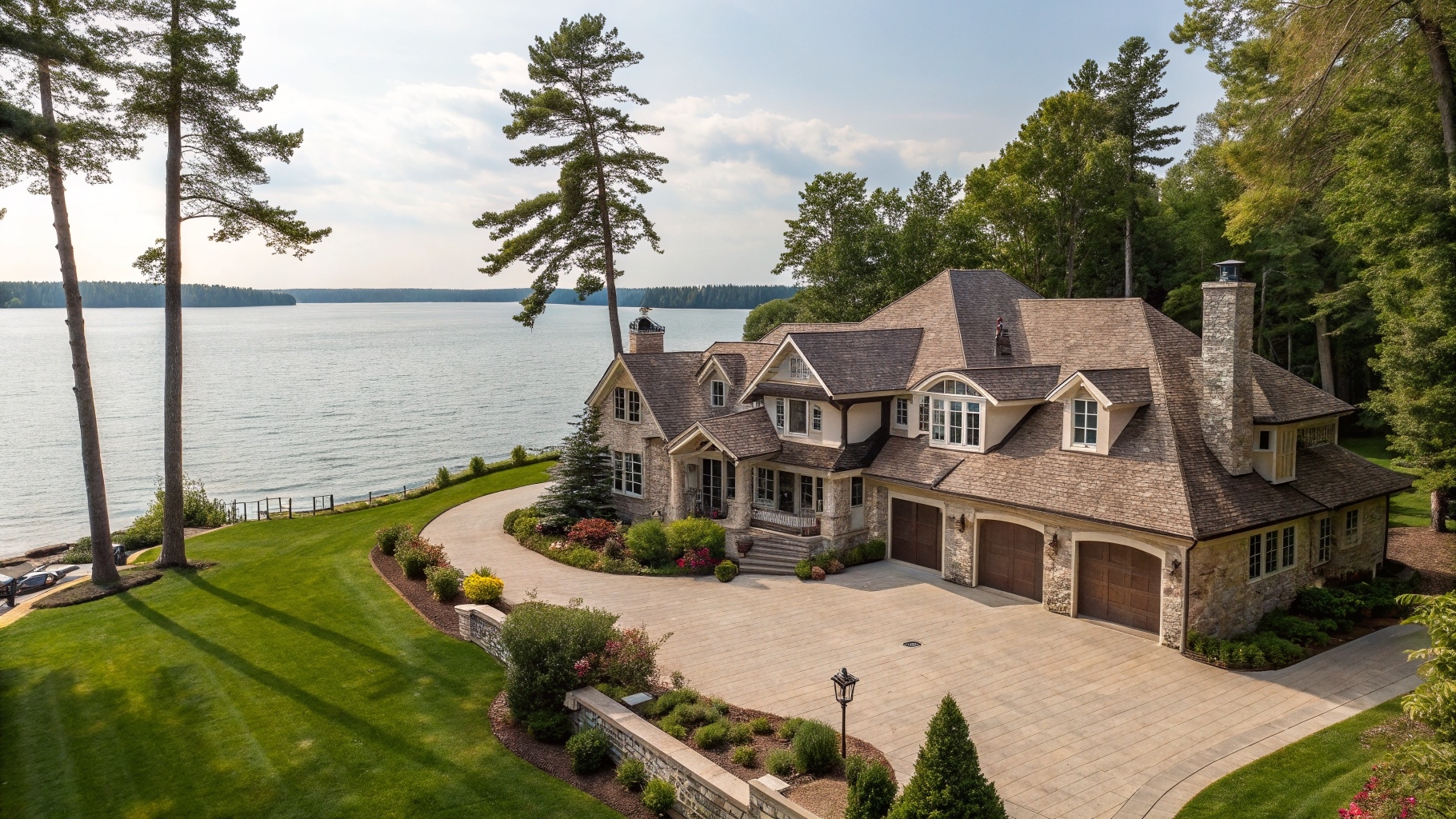
Carpenter Ants in Chenequa aren't a generic problem — they're shaped by Pine Lake's moisture corridor, Chenequa's housing stock, and southeastern Wisconsin's seasonal extremes. PIP's treatment protocols for carpenter ants in Chenequa are built on these local realities — not a franchise playbook copied from another state.
Local environment, housing stock, and Wisconsin climate create carpenter ants conditions specific to Chenequa — not a generic problem with a generic solution.
Proximity to Pine Lake, Beaver Lake, North Lake (adjacent) — a concentration of water features unusual for inland Waukesha County — elevates soil moisture around foundations in Chenequa, softening wood where carpenter ants establish satellite colonies. With 3 water features within foraging range, carpenter ant colonies here have more moisture-compromised wood to exploit than in any single-water community. The mature tree canopy — anchored by old-growth oak-hickory forest and extensive deer trails through residential properties — provides carpenter ant superhighways. Parent colonies in dead stumps and rotting limbs extend satellite nests through branches that contact rooflines, bypassing ground-level barriers entirely. Properties in the Pine Lake estates area are particularly vulnerable where canopy overhang meets older rooflines. Dense forest canopy and dual lake proximity create the most humid residential microclimate in Waukesha County. Deer population density exceeds 30 per square mile, driving deer tick (Lyme disease vector) pressure to critical levels. Lake-effect fog penetrates wooded lots nightly from May through October.
Exclusive community of 1930s–1960s estate homes on 3–10 acre wooded lakefront lots. Exclusive community of 1930s–1960s estate homes on 3–10 acre wooded lakefront lots — many of these older homes have original wood sill plates, balloon-frame construction, and aging caulk creating entry points that modern homes avoid. These structures require extra attention at rim joists and window headers. Carpenter ants don't eat wood — they excavate it for nesting — and they're drawn to wood already compromised by moisture. In Chenequa, the combination of Pine Lake-effect humidity and aging construction materials from the mid-century era creates persistent vulnerability from March through November.
In Chenequa, pavement ants establish trails along Pine Lake estates-area sidewalks and driveways by mid-March. Carpenter ants become visible during April swarming flights — winged reproductives emerging from wall voids and ceiling junctions signal an interior colony that may have been active for 2–3 years. Wooded lots near old-growth oak-hickory forest see parent colonies in stumps launching satellite nests into adjacent structures through direct wood-to-wood contact.
Carpenter Ants in Chenequa can be dangerous — causing significant property damage when left untreated. PIP provides same-day emergency response throughout Chenequa and all of Waukesha County. Don't wait — call (262) 893-5271 now.
Wisconsin's climate drives distinct carpenter ants patterns. Here's what Chenequa homeowners face each season — and what to do about it.
As soil temperatures in Chenequa rise above 50°F in March, overwintered ant colonies resume foraging. Carpenter ant swarming flights peak in April–May — winged ants emerging inside your home signal a mature interior colony. Pavement ants become visible along Pine Lake estates-area driveways and sidewalks. Snowmelt moisture from Pine Lake-adjacent properties saturates soil around foundations, softening wood and triggering new colony establishment.
View Spring forecastJune through August is peak carpenter ant activity in Chenequa. Satellite colonies expand into structural wood as foraging trails intensify. Parent colonies in nearby stumps and dead trees near old-growth oak-hickory forest send thousands of workers into homes through direct wood contact. Pavement ant wars — where rival colonies fight along sidewalk cracks — are a common summer sight in the Pine Lake estates area that indicates high local populations.
View Summer forecastSeptember–October brings a critical shift: ants establish overwintering positions inside wall voids and beneath insulation. If carpenter ants aren't eliminated before Chenequa's first hard freeze (typically late October), they survive winter inside heated structures and resume damage in spring. Fall is actually the optimal time for treatment — bait products are carried deep into colonies preparing for winter.
View Fall forecastAnts are not dormant inside heated Chenequa homes. Carpenter ants continue excavating galleries in insulated wall voids where temperatures stay above 50°F. You may see occasional worker ants near heat sources (dishwashers, dryers, baseboard heaters) even in January. Interior winter sightings almost always indicate an established wall-void colony, not a new invasion. Older Chenequa homes with less insulation may see more winter ant activity as colonies seek warmer internal spaces.
View Winter forecastPIP's carpenter ants treatment in Chenequa follows a 4-step protocol designed for moisture-heavy lakefront environments. Every service starts with a free inspection — we diagnose before we treat, and we never apply generic solutions.
Our technician identifies the exact ant species in your Chenequa home — treatment for carpenter ants differs entirely from pavement ants or odorous house ants. We probe wood-to-soil contacts, check moisture readings, and trace foraging trails to locate nest origins.
Non-repellent liquid barrier applied around the full foundation perimeter, targeting soil-to-structure interfaces, utility entry points, and confirmed trailing routes. Granular treatment extended to tree stumps and woodpiles within 20 feet of the structure.
Gel bait injected into wall voids through tiny drill holes near confirmed nest sites. Dust formulations applied inside electrical outlets, switch plates, and plumbing penetrations where ants travel. No spray contact required inside living spaces — targeted application minimizes exposure.
Entry points sealed with polyurethane sealant. Moisture sources identified and documented for homeowner correction. Vegetation trimmed 12 inches from siding. Firewood relocated 20 feet from the house. Follow-up monitoring scheduled to confirm colony elimination.
All PIP treatments in Chenequa use EPA-registered, targeted products applied by Wisconsin-licensed technicians. Our methods prioritize family and pet safety — crack-and-crevice application, gel baits, and exterior barriers minimize indoor exposure. We provide specific re-entry timelines for every treatment.
If carpenter ants return between scheduled treatments, PIP re-services your Chenequa property at no additional charge. Our results-backed guarantee means you only pay for protection that works.
Carpenter Ants treatment pricing in Chenequa is based on your home's square footage, severity of the issue, and number of treatment points. Every home is different, which is why PIP offers free inspections with transparent, upfront pricing before any work begins. Annual prevention plans — which include quarterly monitoring — provide the best long-term value. No contracts required.
PIP provides same-day emergency service throughout Chenequa and all of Waukesha County. For non-emergency situations, we typically schedule within 24–48 hours. Our Chenequa-area technicians carry full treatment equipment, so most jobs are completed in a single visit. Call (262) 893-5271 for immediate scheduling.
All PIP treatments use EPA-registered, targeted products applied by licensed Wisconsin technicians. Our methods prioritize crack-and-crevice application, gel baits, and exterior barriers that minimize exposure inside living spaces. We provide specific re-entry guidelines for each treatment — typically 30 minutes to 2 hours. Pet and child safety is always the first design consideration.
Carpenter Ants pressure in Chenequa varies by season, but year-round monitoring provides the most reliable protection. Quarterly service visits aligned with Wisconsin's seasonal pest cycles ensure treatment stays ahead of population surges. One-time treatments resolve immediate issues, but prevention plans stop infestations before they start — which is always cheaper than emergency response.
Lake proximity in Chenequa elevates moisture levels year-round, creating conditions that soften structural wood and attract moisture-dependent carpenter ants. PIP's Chenequa treatment protocols are designed for these specific conditions.
Carpenter ants in Chenequa are significantly larger (1/4 to 1/2 inch), typically black or dark brown, and produce sawdust-like frass near their nesting sites. Regular pavement ants are small (1/8 inch) and trail along sidewalks and countertops. If you see large ants with wings indoors — especially in spring — that's a carpenter ant swarm indicating a mature wall-void colony. PIP provides free species identification as part of every inspection.
Yes. Carpenter ants excavate galleries in structural wood — they don't eat it, but the hollowed-out channels weaken floor joists, wall studs, and window headers over time. Left untreated for 3–5 years, carpenter ant damage can require structural repair costing thousands of dollars. Early detection through annual inspection is far more cost-effective than repair.
We live and work in Mukwonago. Your pest problems are our neighborhood's pest problems. No call centers, no corporate runaround.
Unlike reactive exterminators, PIP focuses on preventing infestations before they start. Our seasonal programs keep pests out year-round.
We use targeted, EPA-registered products with minimal environmental impact. Safe for your family, pets, and Wisconsin's ecosystem.
Wasp nest by the front door? Mice in the kitchen? We respond the same day because emergencies can't wait.
Pay only for what you need. No long-term commitments, no cancellation fees. Pricing based on your home square footage. We earn your business every visit.
Love PIP? Refer a friend and you both save. You earn 10–20% off your next service; they get 20% off their first.
Don't wait when safety is at risk. PIP's emergency team responds same-day across Waukesha County.
Call Now: (262) 893-5271